Beautiful Churches, Temples & Synagogues for Weddings in Broward County
SHAY Photo Studio · Fort Lauderdale, Florida
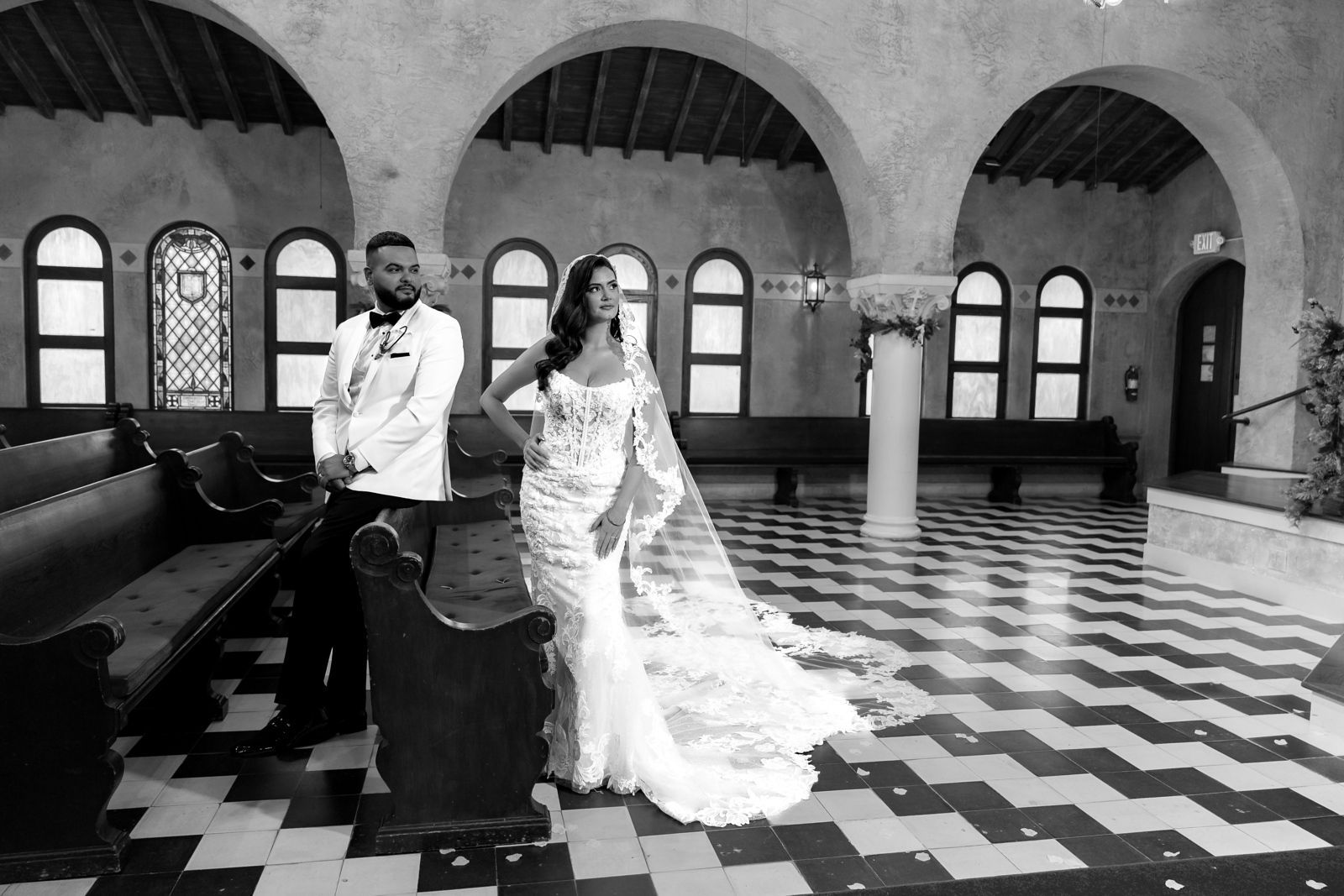
There is something completely different about the moment the doors of a church or synagogue open and a wedding ceremony begins.
The music changes. Conversations stop. Everyone turns around. For a few minutes, a building that may have stood for decades becomes part of one family's story.
South Florida gives couples an enormous range of wedding settings, from oceanfront hotels and ballrooms to gardens and private estates. But for many couples, the ceremony itself belongs somewhere sacred.
Broward County has historic churches, dramatic sanctuaries, Jewish congregations, and religious communities throughout Fort Lauderdale and the surrounding cities. Choosing among them is about much more than finding a beautiful aisle.
A religious ceremony location can affect your wedding timeline, photography, video, family portraits, transportation, and even where your photography team is permitted to stand.
After photographing weddings throughout South Florida for nearly two decades, one of the biggest things we can tell couples is this: ask about the ceremony rules before the wedding day.
A beautiful building is only one part of the decision..
FIRST PRESBYTERIAN CHURCH OF FORT LAUDERDALE
First Presbyterian Church sits at 401 SE 15th Avenue in Fort Lauderdale's Colee Hammock neighborhood, near the New River and just south of Las Olas Boulevard.
For couples who love the feeling of a traditional church ceremony while staying close to Downtown Fort Lauderdale, the location places the ceremony near many of the hotels, reception spaces, and portrait locations couples use around Las Olas and the downtown area.
The church has a dedicated wedding process and currently directs couples to contact its wedding coordinator for availability, wedding information, the service contract, and current fees.
From a photography standpoint, a traditional sanctuary creates opportunities for the entire story: the processional, reactions at the front, wide photographs of the ceremony space, vows, rings, the first kiss, and the walk back up the aisle.
But this is exactly why couples should confirm photography and video rules with the church. Religious properties may have guidelines about flash, movement, altar access, and where cameras can be positioned.
Those rules can change, so the current church policy should always be the final authority..
CORAL RIDGE PRESBYTERIAN CHURCH
Coral Ridge Presbyterian Church at 5555 North Federal Highway in Fort Lauderdale is one of the more visually recognizable religious properties in the area.
The church actively offers its campus for weddings and events. Its current event information describes more than 20 spaces across the campus, including a large sanctuary, chapel, and fellowship spaces. The church also lists on-site parking, an event coordinator, and photography settings among its event features.
That variety can be helpful for couples who want the ceremony and other portions of the day close together. A large sanctuary also changes the way photography and video need to be planned. A photographer may be working from farther away during parts of the ceremony, while a videographer may need to think carefully about camera placement and audio before guests arrive.
This is another reason we recommend that photography and video begin before the ceremony rather than at the exact ceremony start time. The team needs time to see the light, understand the room, confirm current rules, and be in position before the first person walks down
the aisle.
ST. ANTHONY CATHOLIC CHURCH IN FORT LAUDERDALE
For couples planning a Catholic wedding, St. Anthony Catholic Church is located at 901 NE 2nd Street in Fort Lauderdale.
Its published marriage materials outline a formal preparation and scheduling process for weddings, which is a good reminder that Catholic weddings often involve requirements that go well beyond
simply reserving a date.
Couples considering a Catholic ceremony should begin speaking with the parish early and follow the parish's current marriage-preparation requirements.
From the photography and video side, Catholic ceremonies can also have specific rules regarding flash, movement, and access near the altar. A full Mass may create a different timeline from a shorter ceremony, and that can affect everything that happens afterward, especially family photographs and cocktail hour.
We never recommend assuming that rules at one Catholic church will be identical to another.
Ask the parish what is currently permitted, and let your photography and video team know before the wedding whenever possible.
CHABAD LUBAVITCH OF FORT LAUDERDALE
Jewish weddings bring their own extraordinary visual language: the chuppah, ketubah, rings, family traditions, dancing and the breaking of the glass are only part of the story.
Chabad Lubavitch of Fort Lauderdale, located at 3500 North Ocean Boulevard, currently lists its Social/Simcha Hall as available for simcha celebrations, including weddings and Bar/Bat Mitzvahs.
For couples planning a Jewish wedding, it is especially important that the photography and video team understand the order of events rather than simply showing up expecting a generic ceremony timeline.
Some Jewish weddings may include a ketubah signing before the public ceremony. Others may include a bedeken or additional family traditions. Timing and customs vary by couple, congregation, and level of observance.
Those earlier moments are another reason photography and video should begin before the ceremony.
If coverage starts only when the processional begins, some of the most meaningful parts of the Jewish wedding story may already be over.
DOWNTOWN JEWISH CENTER CHABAD OF FORT LAUDERDALE
Downtown Jewish Center Chabad is located at 900 E Broward Boulevard in Fort Lauderdale and serves the downtown Jewish community.
For couples exploring a synagogue or Jewish ceremony setting, a downtown location can also influence the logistics surrounding the wedding day: hotel proximity, traffic, parking, portrait locations and travel time between the ceremony and reception.
We recommend speaking directly with the congregation about whether it can accommodate the type and size of wedding you are planning and what current ceremony, photography and video policies apply.
A congregation's general location and worship information should never be treated as confirmation that a particular wedding date, space or arrangement is available..
WHAT SHOULD WE ASK A CHURCH, TEMPLE OR SYNAGOGUE BEFORE BOOKING?
Couples naturally ask about dates and pricing first.
For photography and video, we would add several questions.
Are photographers allowed near the front of the ceremony?
Can photographers move during the ceremony?
Is flash photography permitted?
Are videographers allowed to place stationary cameras in the sanctuary?
Are there restrictions around the altar, chuppah or other sacred areas?
How early may the photography and video team enter?
Is there a separate room where the bride or groom can wait before the ceremony?
How quickly must everyone leave the ceremony space afterward?
Can immediate-family photographs be taken at the altar or ceremony
location after the wedding?
Are there other services or events immediately before or after the ceremony?
Where should vendors park and unload equipment?
The answers can affect the wedding timeline considerably.
WHY SHOULD PHOTOGRAPHY AND VIDEO ARRIVE BEFORE THE CEREMONY?
A ceremony does not begin for the photography team when the bride
starts walking down the aisle.
By then, we should already be ready.
We want time to understand the light, speak with the person overseeing
the ceremony when possible, confirm any restrictions, photograph the
ceremony space before it fills with guests and position ourselves
before the processional starts.
The beginning of the wedding story also happens before the ceremony.
There may be photographs of the dress, rings, invitations, bouquet,
final makeup, parents seeing the bride or groom, bridesmaids helping
with the dress, groomsmen getting ready, a first look, a first touch,
a ketubah signing or quiet moments with family.
If photography and video begin at the ceremony itself, those moments are gone.
HOW DO CEREMONY RESTRICTIONS AFFECT WEDDING PHOTOS?
Restrictions do not automatically mean poor photographs.
They mean the team has to plan differently.
If flash isn't permitted, the photographer needs to work with the
available light.
If photographers cannot stand near the altar, longer lenses and
careful positioning become more important.
If movement is restricted, the team may have fewer opportunities to
change perspectives during the ceremony.
The most important thing is knowing the rules before an important
moment is happening.
We respect religious spaces and the people leading the ceremony. Our
job is to document the wedding without becoming part of it.
SHOULD WE TAKE FAMILY PHOTOS AT THE CHURCH OR SYNAGOGUE AFTERWARD?
Sometimes that is the perfect place. Sometimes the timeline makes
another location better.
If the ceremony space is beautiful and the venue permits portraits
afterward, the altar or sanctuary can provide a meaningful background
for parents, grandparents and immediate family.
But couples should find out how much time is actually available.
If another service or wedding follows yours, there may be a firm exit
time. A large family portrait list can easily take longer than
expected, especially when relatives leave the ceremony area before
photographs begin.
Having a family-photo list and one person who knows the family help
gather people can save a surprising amount of time.
WHAT ABOUT TRANSPORTATION BETWEEN THE CEREMONY AND RECEPTION?
Broward County weddings often combine locations.
A couple may get ready at a Fort Lauderdale Beach hotel, marry in a
downtown church or synagogue and celebrate at a completely different
reception venue.
On a map, those locations can look close.
On a busy South Florida weekend, traffic, bridges, parking, loading
equipment and getting a wedding party into vehicles can add time.
Build travel into the photography timeline rather than treating it as
invisible time.
If you want portraits at a third location between the ceremony and
reception, that needs to be included too.
THE CEREMONY LOCATION BECOMES PART OF THE STORY
Years later, couples may remember the music that played before they
entered, the way the sanctuary looked from the aisle, the expression
on a parent's face, the sound of everyone cheering after the glass
broke or the feeling of walking back through the doors married.
That's why choosing a church, temple or synagogue is different from
simply choosing a room.
For many families, it connects the wedding to faith, tradition,
parents, grandparents and a community that existed long before the
wedding day.
The best photography and video planning protects that meaning while
still making sure the practical pieces work.
Ask the questions early. Confirm the current rules. Give the
photography and video team time before the ceremony. Build realistic
travel and portrait time into the schedule.
Then, when the doors open and everyone turns around, you can stop
thinking about the timeline and experience the moment.
FREQUENTLY ASKED QUESTIONS
What are some religious wedding ceremony locations in Fort Lauderdale?
Fort Lauderdale includes churches and Jewish congregations such as
First Presbyterian Church of Fort Lauderdale, Coral Ridge Presbyterian
Church, St. Anthony Catholic Church, Chabad Lubavitch of Fort
Lauderdale and Downtown Jewish Center Chabad. Wedding availability and
policies should always be confirmed directly with each location.
Can photographers use flash during a church or synagogue wedding?
It depends on the location. Some religious venues restrict flash or
photographer movement, so couples should confirm the current policy
directly with the church, synagogue or temple before the wedding.
How early should wedding photographers arrive at a church or synagogue?
Photography and video should begin before the ceremony so the team
has time for pre-ceremony storytelling, setup, lighting checks,
current venue rules and positioning before the processional begins.
Can we take family pictures inside the church after the ceremony?
Often this depends on the venue's schedule and policies. Couples
should ask how long they may remain after the ceremony and whether
altar or sanctuary portraits are permitted.
What should Jewish couples tell their photographer before the wedding?
Share the complete order of events and any traditions that matter
to your family, including anything happening before the public
ceremony such as a ketubah signing or bedeken. Customs and timing vary
by wedding.
Do religious wedding venues have different photography rules?
Yes. Rules can vary by property and can change over time. The
current policy of the individual venue should always control.